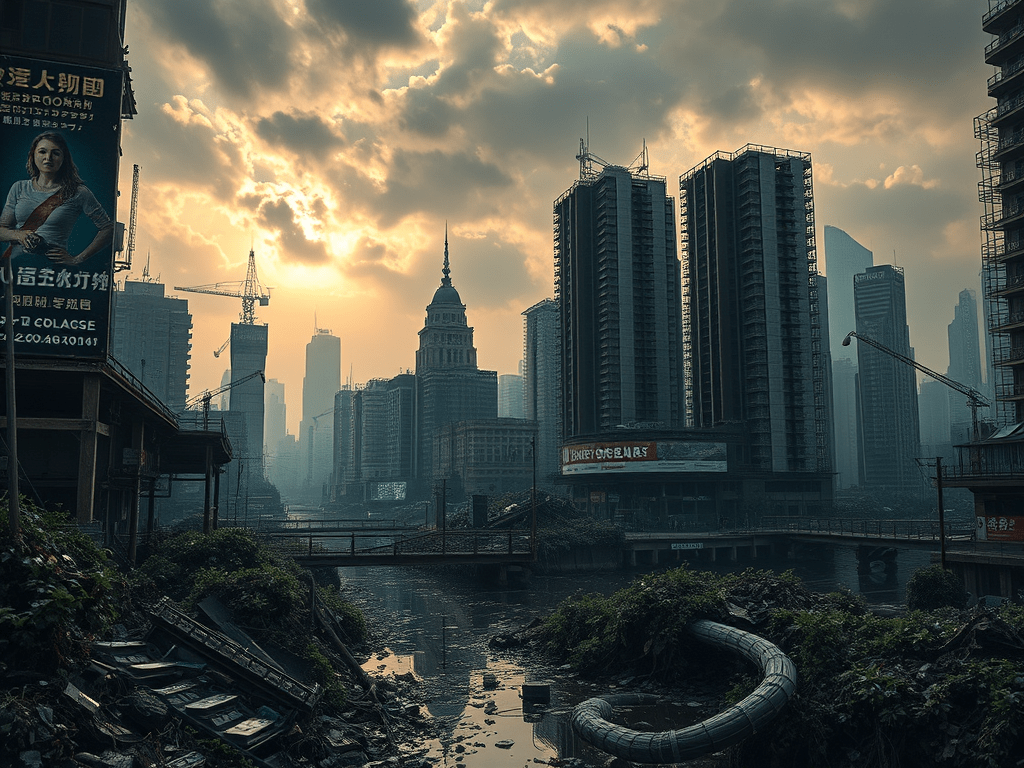
“Whether the future is wonderful or terrible is, in part, up to us.” — William MacAskill
The current population of our planet is around 8 billion, and in the future, trillions more will live on Earth—even without considering the possibility of making other planets habitable. These trillions, who haven’t been born yet, will also have the capacity to live either good or bad lives. It is our responsibility to ensure that their lives are not miserable. This perspective is simply called long-termism. It’s a common-sense idea, and philosopher William MacAskill uses an example to illustrate this.
Imagine we are hiking through a mountain, and a glass bottle breaks on the trail, leaving sharp pieces that could injure the next hiker. Even if we believe that no one will hike that trail anytime soon, we still feel compelled to remove the glass to prevent potential harm.
The moral of the story is that we should take the well-being of future generations seriously and avoid making decisions that could ruin their lives—because they are many. If an ideology suggests that it’s acceptable to ignore long-termism, then it is obviously flawed.
Capitalism is such an ideology. As capitalism strengthens, the state loses its ability to enforce welfare, and the market begins to dictate outcomes. However, the market only caters to the interests of those who are capable of participating in it.
Let’s analyze this with an example.
Greenhouse gas emissions play a significant role in climate change, and if this continues, trillions of future people will suffer. More climate-friendly alternatives to fossil fuels exist, but they are expensive and affect market prices. The current generation, which actively participates in the market and has the power to influence prices, will likely choose the cheaper, more harmful option. Even if an entrepreneur adopts eco-friendly alternatives in production, they risk losing out to competitors who use cheaper but environmentally damaging methods.
Future generations, who don’t yet exist, have no ability to participate in the market or influence the cost of sustainable alternatives. Even if, in some lucky scenario, a sustainable alternative becomes the cheaper option, the future will inevitably present new crises where market forces prioritize short-term gains over long-term well-being. Capitalism, even in principle, endorses this kind of recklessness.
This leads to an important implication: Even if alternative socialist models are not the best for the current generation, we must adopt them because they ensure the overall well-being of both present and future generations.
The only way capitalists can reject this argument is by taking the absurd position that the suffering of future generations is acceptable.
Well, that’s my utilitarian territory—and you won’t have a chance to win there.
 Reductio
Leave a comment