Recently, I came across a Facebook post from a user named Rakesh Unnikrishnan.
The post is available here and is in Malayalam.
It critiques the view that the conflict between Palestine and Israel should be viewed from the lens of Settler colonialism.
This post is intended to respond to the critiques presented by Mr. Rakesh Unnikrishnan. In short, you can call this as a critique of Rakesh Unnikrishnan’s critique.
Before the main points, I want to address one statement from Mr. Rakesh which is this
“ഒക്ടോബർ 7-ന് ശേഷമാണ് ഈ പദം കൂടുതൽ കേട്ട് തുടങ്ങിയതെങ്കിലും, രണ്ടു പതിറ്റാണ്ടായി അക്കാദമിക് വിദഗ്ധർക്കിടയിൽ സ്വാധീനം ചെലുത്തിയ ആശയമാണിത്”
Well, it is not clear whether this is Rakesh Unnikrishnan’s view, or the view presented by the book he referenced (Aam Kirsch’s On settler colonialism: Ideology, violence, and justice). The settler colonial studies have been in the academia since 1990’s since Patrick Wolfe theorized this concept of colonialism as a different form of domination. Again, this is a minor point that I wanted to highlight and is not the core points of my critique.
So, let’s come to the point, firstly he says this
“തദ്ദേശീയ ജനങ്ങളിൽ നിന്ന് പിടിച്ചെടുത്ത ഭൂമിയിൽ യൂറോപ്യൻ കുടിയേറ്റക്കാർ സ്ഥാപിച്ച അമേരിക്ക, കാനഡ, ഓസ്ട്രേലിയ തുടങ്ങിയ രാജ്യങ്ങളെ ആണ് settler colonialism എന്ന പദം കൊണ്ട് ചില അക്കാദമിക്കുകൾ വിശേഷിപ്പിക്കുന്നത്”
Well, he is saying that the nations that he mentioned are called settler colonialism. He is partly right here. The process by which these nations are formed are called settler colonialism. Just like we say British India as colonialism
And what is the process for Settler colonialism?
We have done a video regarding the same here.
We have defended the view that
Settler colonialism is a form of colonialism in which foreign settlers arrive with the intent of replacing the native population, not integrating into their society
Now whether Israel is a result of settler colonialism is just a matter of checking whether the Zionist movement -which started and executed the formation of Jewish state of Israel, did arrive with the intent of replacing the native population and executed in accordance with their intent.
That settles the discussion whether Israel is a settler colonial state or not and as discussed earlier, we have shown in an earlier video that the historical evidence do point to the fact that Israel is a settler colonial project
Let’s focus on his other point
സാമ്രാജ്യശക്തി പിൻവാങ്ങിയിടത്തുപോലും, വിമോചിതരായ ഇന്ത്യ, ഇസ്രായേൽ ഉൾപ്പടെ ഉള്ള രാജ്യങ്ങൾ പലപ്പോഴും അതിർത്തികൾ നിർണ്ണയിക്കാൻ യുദ്ധങ്ങൾ ചെയ്യേണ്ടി വന്നു.
Note the point that Mr. Rakesh is including Israel among the list of nations that became free when colonial empires retreated. This is a gross misreading of history. There was no concept of ISRAEL which was under British Empire to begin with. The Britishers supported the formation of a Jewish state without any discussion or approval from the native population and passed on the colonial control to Israel. So rather than saying Israel got freedom from Britishers, the accurate description is that the colonial control over Palestinian native population got transferred from Britishers to the settler colonial control of Israel.
His next point says
അമേരിക്കയിലെ കുടിയേറ്റ കൊളോണിയലിസത്തിന്റെ സൈദ്ധാന്തികർ പറയുന്നത്, Decolonialization (അപകോളനീകരണം) കുടിയേറ്റക്കാരുടെ സ്വത്തവകാശത്തെയും പരമാധികാരത്തെയും ഇല്ലാതാക്കുന്നു എന്നാണ്. പ്രായോഗികമായി, “പരമാധികാര തദ്ദേശീയ ഗോത്രങ്ങൾക്കും രാഷ്ട്രങ്ങൾക്കും ഭൂമി തിരിച്ചുനൽകുക” എന്നാണ് ഇത് അർത്ഥമാക്കുന്നത്
This again a false narrative. We have interviewed Dr. Lorenzo Veracini who is an expert on settler colonial studies in the video below
At timestamp: 1:18:06, we discuss decolonization, and we asked similar question to Mr. Veracini on what decolonization means. We asked him does decolonization refer to the idea of expelling all Jews from Israel. His response was
I am not saying that. I am not for ethnic cleansing. What is important here is to know that decolonization is about allocation of rights and prerogatives. If the settler is made by movement and conquest, decolonization will be unmaking at least one of the two. So, they could go back, or they could cease conquest. I like the second one.
So here one point is clear, Mr. Rakesh is clearly misinformed on what is decolonization in the context of settler colonialism. Even the most prominent expert on settler colonial studies here advocates the view that stopping conquest is enough to reach a status of decolonization.
Decolonization doesn’t necessarily mean settler moving away from the nation, but rather a change in the relation between indigenous and settlers is enough. Settler should seize being settlers and indigenous should seize being indigenous. The rights should be distributed equally among the settlers and indigenous. That is what decolonization is.
Mr. Rakesh goes on to say that
എന്നാൽ ഈ സൈദ്ധാന്തികർ, അമേരിക്കയുടെ ഏതൊക്കെ ഭാഗങ്ങളാണെന്ന് തദ്ദേശീയ ഗോത്രങ്ങൾക്ക് തിരികെ നൽകേണ്ടതെന്നോ ഇപ്പോൾ അവിടെ താമസിക്കുന്ന പുതു തലമുറ വെള്ളക്കാർ എങ്ങോട്ടേക്കാണ് പോകേണ്ടതെന്നോ വ്യക്തമാക്കുന്നില്ല
Again, here Mr. Rakesh assumes decolonization in the term of leaving the land. In fact, countries such as USA are termed as successful settler colonial projects which means intention of settlers (to replace the society of native population with settler society) is successfully completed and now the indigenous society is completely decimated. USA now looks like a society built by white people and doesn’t have any resemblance to the society of native Americans. In such a society, a progressive outlook is interested more on whether the marginalized community have equal opportunity to thrive rather than deciding how many acres of land we should allocate to indigenous community. Note that if the problems of the marginalized community are about lack of lands, then surely that is what we should be doing but here the main focus is on whether marginalized communities have equal opportunity to be part of the society of the settler and thrive and not on how many acres of land to give from a given state in USA.
His next point is regarding a protest on oil pipeline construction in USA is this
2016-ൽ എണ്ണായിരത്തോളം ആളുകൾ താമസിക്കുന്ന, നോർത്ത്, സൗത്ത് ഡക്കോട്ടയിൽ പരന്നു കിടക്കുന്ന Standing Rock Sioux റിസർവേഷൻ അതിർത്തിയിൽ, മണ്ണിനടിയിലൂടെ എണ്ണ കൊണ്ടു പോകാൻ ഉള്ള പദ്ധതി ആയ ഡക്കോട്ട ആക്സസ് പൈപ്പ്ലൈൻ നിർമ്മാണത്തിനെതിരെ പ്രതിഷേധം ആരംഭിച്ചു. തങ്ങളുടെ പൂർവികരെ അടക്കിയിരിക്കുന്ന പുണ്യഭൂമിയെ ഈ പൈപ്പ്ലൈൻ നശിപ്പിക്കുമെന്നും ജലവിതരണത്തെ മലിനമാക്കുകയും ചെയ്യും എന്നാരോപിച്ചുകൊണ്ട് പ്രതിഷേധക്കാർ ഒരു നിർമ്മാണ സ്ഥലത്ത് പ്രതിഷേധിച്ചപ്പോൾ അവരെ ഭരണകൂടം നായ്ക്കളെയും ജലപീരങ്കികളെയും ഉപയോഗിച്ച് നേരിട്ടു. ഈ ഏറ്റുമുട്ടൽ അന്താരാഷ്ട്ര ശ്രദ്ധ ആകർഷിച്ചു. അതിനും അഞ്ചു വർഷം മുമ്പ് നടന്ന Occupy Wall street പ്രതിഷേധം പോലെ സ്റ്റാൻഡിംഗ് റോക്ക് പ്രതിഷേധം, പരിസ്ഥിതിവാദം, ക്യാപിറ്റലിസ്റ് വിരുദ്ധത തുടങ്ങി നിരവധി ആക്ടിവിസങ്ങളുടെ കേന്ദ്രമായി മാറി. ആശ്ചര്യമായി ആ കൂട്ടത്തിൽ പാലസ്തീൻ വിമോചനം ആവശ്യപ്പെടുന്നവരും ഉണ്ടായിരുന്നു. ഒരു എണ്ണ പൈപ്പ് ലൈൻ നിർമ്മാണം തടയുന്നതും പലസ്തീൻ വിമോചനവും വളരെ വ്യത്യസ്തമായ ലക്ഷ്യങ്ങളായി തോന്നിയേക്കാം, പക്ഷേ പല പുരോഗമനവാദികൾക്കും, ഇവ രണ്ടും കുടിയേറ്റ കോളനിവൽക്കരണത്തിന് എതിരെ ഉള്ള ഒരേ പോരാട്ടമാണ്
Here I am not sure what is the point Mr. Rakesh is trying to argue, I think he is hinting these two issues are both different. But if he is assuming that then he hasn’t given any reason why. Because both Palestine issue and the indigenous conflict that happened in 2016 is directly related to settler colonialism so what exactly is bad or problematic when victims of settler colonialism showing solidarity towards each other?
From the perspective of victims of settler colonialism this is a common issue that needs to be addressed together. Is Mr. Rakesh believing in some self-evident doctrine which is invisible to the indigenous community?
Anyways since it is not clear what he is trying to argue I won’t say anything further on this point.
Let us move to the next point he raises
ചൈനീസ് സർക്കാർ, ഒരു ദശലക്ഷം ടിബറ്റൻ കുട്ടികളെ സാംസ്കാരികമായും മതപരമായും ഭാഷാപരമായും പരിവവർത്തനം ചെയ്യാൻ നിർബന്ധിതമായി സ്കൂളുകളിൽ ചേർക്കുന്നതായി 2023-ൽ യു.എൻ മനുഷ്യാവകാശ സംഘടന റിപ്പോർട്ട് ചെയ്തു. 2017 മുതൽ ഒരു ദശലക്ഷത്തിലധികം വരുന്ന ഉയ്ഗൂർ മുസ്ലിം ജനതയെ പുനർ വിദ്യാഭ്യാസ ക്യാമ്പുകൾ എന്ന ഓമനപ്പേരിൽ വിളിക്കുന്ന തടവറകളിൽ ചൈന അടച്ചിരിക്കുന്നു. കൂട്ട വന്ധ്യംകരണത്തിലൂടെയും മറ്റു നിർബന്ധിത ജനന നിയന്ത്രണത്തിലൂടെയും ചൈന ഉയ്ഗൂർ മുസ്ലിങ്ങളെ നിയന്ത്രിക്കുന്നു. ചൈനയിൽ നടക്കുന്ന ഈ സംഭവങ്ങൾ കുടിയേറ്റ കൊളോണിയലിസത്തിന്റെ വക്താക്കൾ അങ്ങനെ സംസാരിച്ചു കാണാനില്ല.
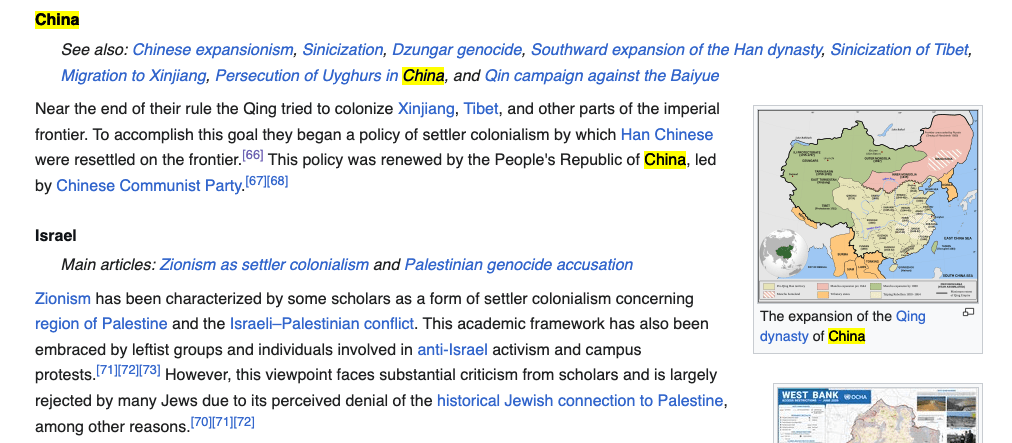
Here again I am sorry to point out that Mr Rakesh is wrong here. Even a basic Wikipedia search would have led him to this page.
https://en.wikipedia.org/wiki/Settler_colonialism
and here we could clearly see the mention of China’s settler colonial project in Tibet.
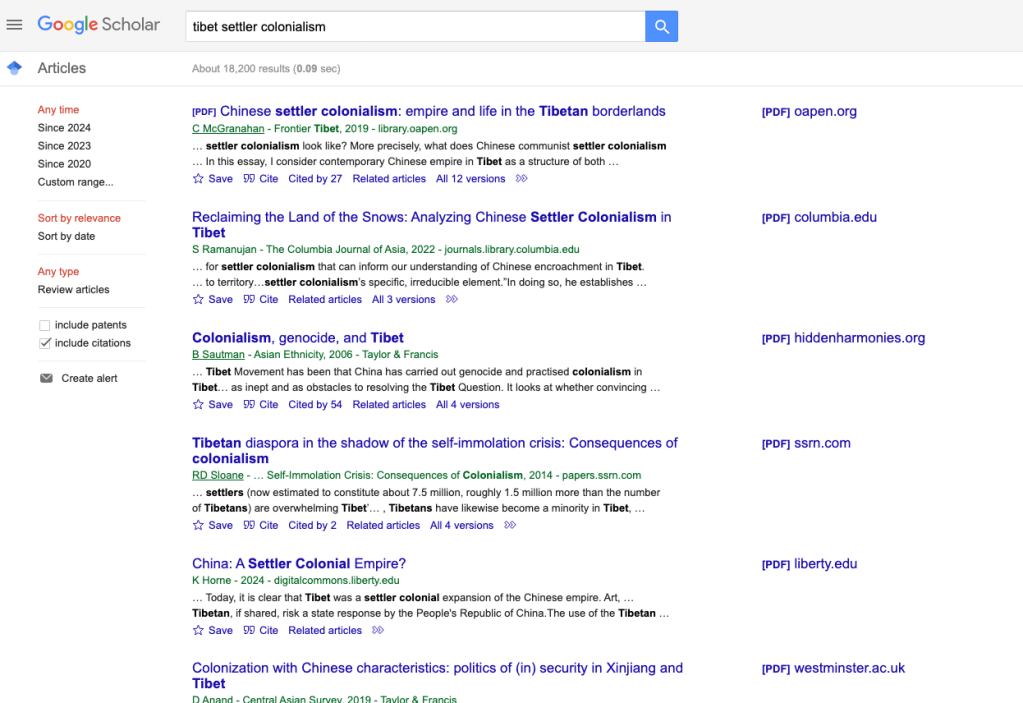
Also, another search in scholarl.google.com showed similar results where we could see hundreds of articles on settler colonialism of China over Tibet
Following is a text from Mr. Lorenzo Veracini’s book titled “COLONIALISM A GLOBALHISTORY”
Beyond Israel–Palestine, it should be noted that many of today’s global conflicts are premised on settler colonialism as a mode of domination. The third global colonial wave leaves waterlogged terrains once it recedes. Recent political developments in various parts of Latin America, where the class divide is also a racial divide, which is also often an Indigenous–settler divide, in Ethiopia, where Oromo lands are being colonised by populations coming from the north, and in Kashmir, where the Indian state is enforcing a localised settler colonial project, epitomise this legacy. Tibet and Xinjiang are subjected to Han Chinese state-sponsored immigration,
Also following is another article that discusses Uighur Muslim – Chinese issue in terms of settler colonialism
If he is interested to look at one similar analysis done from academic point he can read below article for more details
https://journals.library.columbia.edu/index.php/cja/article/view/10012
So clearly the relation between Tibet and China and Uighur Muslims and China are indeed discussed from the framework of settler colonialism. It’s just that Mr. Rakesh didn’t do a basic search on the same before arriving at this conclusion.
Mr. Rakesh then evoked his love for the LGBTQ community by arguing the following
ഒക്ടോബർ 7-ന് ശേഷം, അമേരിക്കയിലെ നിരവധി LGBTQ സംഘടനകൾ പലസ്തീന് ഐക്യദാർഢ്യം പ്രഖ്യാപിക്കുകയും ഹമാസ് ആക്രമണങ്ങളെ പിന്തുണയ്ക്കുകയും ചെയ്യുന്ന പ്രസ്താവനകൾ നടത്തി: “We stand with Palestinians against a settler-colonial state backed by the finances and brutality of the U.S” എന്നതാണ് ഒരു പ്രസ്താവന. ഈ നിലപാടിൻ്റെ പ്രശ്നം മിഡിൽ ഈസ്റ്റിലെ മറ്റേതൊരു സമൂഹത്തേക്കാളും സ്വവർഗ്ഗാനുരാഗികളുടെ അവകാശങ്ങൾക്ക് ഇസ്രായേൽ കൂടുതൽ പിന്തുണ നൽകുന്നു എന്നതാണ്. ഇസ്രായേൽ ആണ് സ്വവർഗ ബന്ധങ്ങൾക്ക് നിയമപരമായ അംഗീകാരം നൽകിയ ആദ്യ രാജ്യങ്ങൾ ഒന്ന്. നേരെമറിച്ച്, പലസ്തീൻ സമൂഹത്തിൽ സ്വവർഗരതി നിഷിദ്ധമാണ്. സ്വവർഗ്ഗാനുരാഗികൾ പീഡനത്തിനും അക്രമത്തിനും ഇരയാകുന്നു. അത്തരത്തിൽ, 2022-ൽ ഇരുപത്തഞ്ചുകാരനായ സ്വവർഗാനുരാഗിയായ അബു മുർഖിയെ ഹെബ്രോണിൽ ശിരഛേദം ചെയ്യുന്ന വീഡിയോ സോഷ്യൽ മീഡിയയിൽ പോസ്റ്റ് ചെയ്യപ്പെട്ടിരുന്നു. ഹമാസിന്, സ്വവർഗരതിയോടുള്ള സമീപനം അവർ “പാശ്ചാത്യ പാപത്തിനോടും അപചയത്തിനോടും” കാണിക്കുന്ന അസഹിഷ്ണുതയ്ക്ക് പ്രാഥമിക ഉദാഹരണമാണ്. 2010-ലെ ഒരു അഭിമുഖത്തിൽ ഹമാസ് നേതാവും പലസ്റ്റീൻ അതോറിറ്റിയുടെ വിദേശകാര്യ മന്ത്രിയായിരുന്ന മഹമൂദ് അൽ-സഹർ ഒരു യൂറോപ്യൻ അഭിമുഖക്കാരനോട് പറഞ്ഞു: “You do not live like human beings. You do not (even) live like animals. You accept homosexuality. And now you criticize us?” എങ്കിലും കുടിയേറ്റ കൊളോണിയലിസത്തിൻ്റെ പ്രത്യയശാസ്ത്രത്തിന് ഈ വസ്തുത മനസ്സിലാക്കാൻ കഴിയില്ല. കാരണം എല്ലാ സദാചാര രാഷ്ട്രീയ സമരങ്ങൾക്കും അവരുടെ ശത്രു ഒന്ന് മാത്രമാണ്
In short, Mr. Rakesh is saying that ” Israel is LGBTQ friendly, and Palestine is hostile to LGTBQ community hence LGBTQ community standing with Palestine is a problem”.
Can someone make sense to these types of arguments?
Let us take the example of Uighur Muslims being treated inhumanely in China as mentioned by Mr. Rakesh itself. Being an atheist would Mr. Rakesh say that since Uighur Muslims are Muslims and Muslims are hostile to atheists hence atheists should support China which is an atheist friendly country?
Or would he stop any atheist who demands for the liberation of Uighur Muslims in China?
That would be ridiculous in the first place to argue that human rights of a community depend upon whether the community is hostile or supportive of the group giving solidarity to the earlier said community
Since when did human rights became a transactional item ?
Extending Mr. Rakesh’s logic if Pakistan attacks India tomorrow the muslims of India should support Pakistan as they are a “Muslim friendly “ nation as Muslims won’t be persecuted for eating beef in Pakistan
Indian women should not be advocating for the human rights of Indian men as women have been subjugated by men for centuries
There has been a long history of criticisms raised against Indian Communist parties for supporting China during the Indo China war
Looks like if we apply Mr. Rakesh’s logic here then the Communist parties were taking a correct stand here. They supported a communist friendly nation over India.
I think these examples are enough to show the absurdity in the arguments presented by Mr. Rakesh on this case
Also, when Israel attacks Palestinian people, does it spare people from LGBTQ community ?
Does the carpet bombing done by the Israeli forces selectively destroys the social and material conditions of only the non LGBTQ community members ?
The Palestinian LGBTQ community is equally under attack on this conflict.
Even if we assume that Israel has designed special bombs that evade the members of LGBTQ community , are we advocating the view that human rights doesn’t apply to Palestinian people? How ethical and cruel is this view .
This brings an end to part 1 of my criticism towards his post. I will continue the criticism in another one


Leave a Reply